E-posta Bounce Oranı: Nasıl Hesaplanır, Karşılaştırılır ve Düşürülür
50.000 e-posta gönderiyorsunuz. Kampanya raporunuz 3.200 bounce gösteriyor. Bu %6,4'lük bir bounce oranı -- ve sadece teslim edilemeyen mesajlardan çok daha fazlası demek. Gönderici itibarınızın zarar gördüğü, gelecekteki kampanyalarınızın spam'e düşme olasılığının arttığı ve büyük posta kutusu sağlayıcıları tarafından engellenme yolunda olabileceğiniz anlamına geliyor.
Bounce oranı, e-posta pazarlamasındaki en önemli metriklerden biridir. Listenizin ne kadar sağlıklı olduğunu, altyapınızın ne kadar iyi performans gösterdiğini ve posta kutusu sağlayıcılarının sizi bir gönderici olarak nasıl algıladığını gösterir. Yine de çoğu e-posta pazarlamacısı bunu sonradan düşünülen bir şey olarak ele alır -- gönderim sonrası göz attıkları ve bir şeyler bozulana kadar unuttukları bir rakam.
Bu rehber, e-posta bounce oranı hakkında bilmeniz gereken her şeyi kapsar: nedir, nasıl hesaplanır, sektör karşılaştırmaları nasıl görünür, teslim edilebilirlik için neden önemlidir, farklı ESP'ler bunu nasıl ele alır ve oranı düşürüp düşük tutmak için sekiz kanıtlanmış strateji.
E-posta Bounce Oranı Nedir?
E-posta bounce oranı, bir kampanyadaki alıcının gelen kutusuna teslim edilemeyen e-postaların yüzdesidir. Bir e-posta "bounce" yaptığında, alıcı mail sunucusunun mesajı reddettiği ve nedenini açıklayan bir hata koduyla göndericiye geri gönderdiği anlamına gelir.
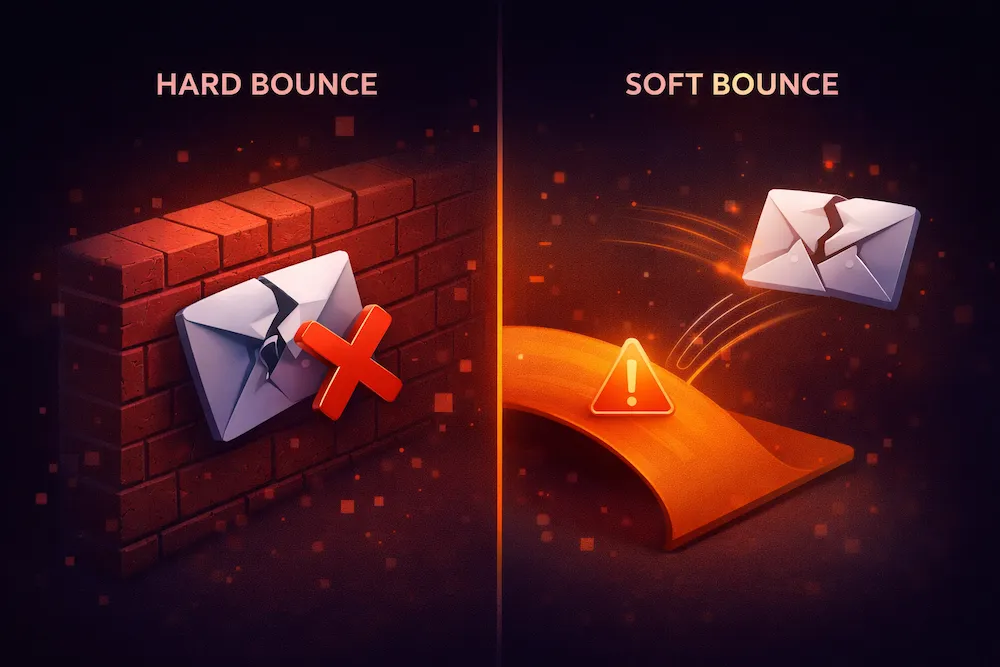
İki tür bounce vardır ve aralarındaki ayrım kritik öneme sahiptir:
- Hard bounce, kalıcı teslim başarısızlıklarıdır. E-posta adresi mevcut değildir, alan adı geçersizdir veya sunucu teslimata kalıcı olarak engel koymuştur. Hard bounce yapan adresler hemen listenizden kaldırılmalı ve bir daha asla e-posta gönderilmemelidir.
- Soft bounce, geçici teslim başarısızlıklarıdır. Alıcının gelen kutusu dolu olabilir, sunucu geçici olarak çalışmıyor olabilir veya mesaj çok büyük olabilir. Soft bounce'lar kendiliğinden çözülebilir, ancak tekrar tekrar soft bounce yapan adresler sonunda kaldırılmalıdır.
Teslim edilebilirlik açısından, hard bounce'lar çok daha tehlikelidir. Yüksek hard bounce oranına sahip tek bir kampanya, Gmail, Outlook ve Yahoo gibi büyük sağlayıcılardan kısıtlama, spam klasörüne yerleştirme veya doğrudan engellemeyi tetikleyebilir.
E-posta Bounce Oranı Nasıl Hesaplanır
E-posta bounce oranı formülü oldukça basittir:
Bounce Oranı (%) = (Geri Dönen E-postalar / Toplam Gönderilen E-postalar) x 100
Genel bounce oranınız için hem hard hem de soft bounce'ları toplama dahil edin
Örneğin, 10.000 e-posta gönderip 150 tanesi geri dönerse, bounce oranınız:
(150 / 10.000) x 100 = %1,5 bounce oranı
Çoğu e-posta servis sağlayıcısı bunu otomatik olarak hesaplar ve kampanya raporlarınızda gösterir. Ancak bazı ESP'ler yalnızca hard bounce oranını gösterirken, diğerleri hard ve soft bounce'ları tek bir rakamlda birleştirir. Doğru karşılaştırma yapabilmek için platformunuzun hangi metriği raporladığını bildiğinizden emin olun.
Hard bounce oranınızı ve soft bounce oranınızı ayrı ayrı hesaplamak da faydalıdır. Hard bounce oranınız daha eyleme dönüştürülebilir bir rakamdır çünkü bu adresler hemen kaldırılmalıdır. Soft bounce'lar zaman içinde izleme gerektirir -- aynı adres üç veya daha fazla kampanyada soft bounce yaparsa, hard bounce olarak değerlendirin.
İyi Bir Bounce Oranı Nedir?
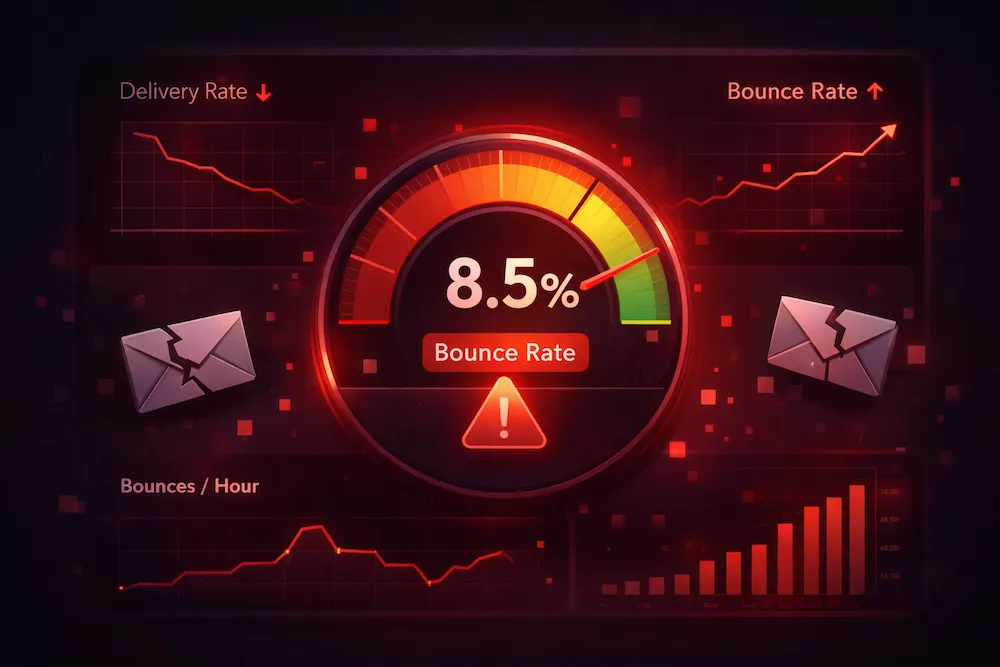
Kısa cevap: %2'nin altı iyi kabul edilir, %0,5'in altı mükemmeldir ve %5'in üstü acil müdahale gerektiren bir kırmızı bayraktır.
Mükemmel (%0,5'in altı)
En iyi seviyeListeniz çok temiz ve iyi bakımlı. Büyük olasılıkla çift onay, düzenli doğrulama kullanıyor ve aktif olmayan aboneleri sürekli olarak kaldırıyorsunuz. Posta kutusu sağlayıcıları size güveniyor.
Kabul Edilebilir (%0,5 - %2)
Sektör ortalamasıListeniz makul ölçüde sağlıklı ama daha temiz olabilir. Bazı adresler eskiyor veya güçlü doğrulama olmadan toplanmış. Düzenli temizlik sizi bu aralıkta tutacaktır.
Sorunlu (%2 - %5)
İlgilenilmeliTehlike bölgesine yaklaşıyorsunuz. Gönderici itibarınız zaten düşüyor olabilir. ISP'ler bounce'ları fark ediyor. Bir sonraki kampanyanızdan önce liste temizliği ve süreç iyileştirmeleri gerekiyor.
Kritik (%5'in üstü)
Acil müdahale gerekliE-postalarınız aktif olarak kısıtlanıyor veya engelleniyor. Gönderici itibarı hasarı devam ediyor. Tam listenize gönderimi hemen durdurun, verilerinizi temizleyin ve kademeli olarak yeniden oluşturun.
Sektöre Göre E-posta Bounce Oranı Karşılaştırmaları
Bounce oranları sektörler arasında önemli ölçüde farklılık gösterir. Bazı sektörler e-posta adreslerinde daha yüksek değişim oranıyla karşılaşır (eğitim gibi, öğrenciler mezun olur), diğerleri ise daha istikrarlı listeler sürdürür. Büyük ESP'lerden derlenen verilere göre sektöre göre ortalama bounce oranları:
| Sektör | Ortalama Bounce Oranı | Durum |
|---|---|---|
| SaaS / Teknoloji | %0,7 - %1,2 | Düşük |
| E-ticaret / Perakende | %0,5 - %1,0 | Düşük |
| Finansal Hizmetler | %0,8 - %1,5 | Düşük |
| Sağlık | %1,0 - %2,0 | Orta |
| Pazarlama / Reklamcılık | %1,0 - %1,8 | Orta |
| Gayrimenkul | %1,5 - %2,5 | Orta |
| Eğitim | %2,0 - %3,5 | Yüksek |
| Kamu / Sivil Toplum | %2,0 - %4,0 | Yüksek |
| İnşaat / Üretim | %2,5 - %4,5 | Yüksek |
| Medya / Eğlence | %0,8 - %1,5 | Düşük |
Bu karşılaştırmalar ortalamalardır. Spesifik oranınız adresleri nasıl topladığınıza, listenizi ne sıklıkla temizlediğinize ve adreslerinizin listede ne kadar süredir olduğuna bağlıdır. İyi bakımlı bir eğitim listesi %1'i kolayca yenebilirken, ihmal edilmiş bir SaaS listesi %5'in üzerine çıkabilir.
Yüksek Bounce Oranlarına Ne Sebep Olur?
Bounce'ların kök nedenlerini anlamak, bunları düzeltmeye yönelik ilk adımdır. E-postaların neden bounce yaptığının en yaygın nedenleri:
Kayıt sırasında yazım hataları (gmial.com, yahooo.com), terk edilmiş adresler veya hiç gerçek olmayan adresler. Bu, hard bounce'ların bir numaralı nedenidir.
E-posta listeleri yılda yaklaşık %22-25 oranında bozulur. İnsanlar iş değiştirir, sağlayıcı değiştirir ve adresleri terk eder. Altı ay önce temiz olan bir listede bugün binlerce geçersiz adres olabilir.
Satın alınan listeler geçersiz, rol tabanlı ve spam tuzağı adreslerle doludur. Neredeyse her zaman %10'un üzerinde, genellikle çok daha yüksek bounce oranları üretirler. Bu, gönderici itibarınızı yok etmenin en hızlı yoludur.
Kayıt formlarınız herhangi bir metni doğrulama olmadan e-posta adresi olarak kabul ediyorsa, ilk günden çöp veri topluyorsunuz. Botlar, yazım hataları ve sahte girişler gelecekteki bounce'lara katkıda bulunur.
Bazı alıcıların posta kutuları dolu veya mail sunucuları geçici olarak erişilemez. Bunlar genellikle kendiliğinden çözülen soft bounce'lar üretir, ancak kalıcı soft bounce'lar terk edilmiş hesapları gösterir.
Bazı kuruluşlar IP'nize, alan adınıza veya içeriğinize göre e-postaları engeller. Bu genellikle gönderici itibarınızın zaten zarar gördüğünün veya alan adınızın bir engelleme listesinde olduğunun bir işaretidir.
Bounce Oranı Gönderici İtibarını ve Teslim Edilebilirliği Nasıl Etkiler
Bounce oranı ve gönderici itibarı doğrudan bağlantılıdır. Her hard bounce, alıcı mail sunucusuna var olmayan adreslere gönderim yaptığınızı söyler. Posta kutusu sağlayıcıları bunu listenizi bakımlı tutmadığınızın bir işareti olarak yorumlar -- ki bu bir spam gönderenin ayırt edici özelliklerinden biridir.
Hasarın nasıl kademeli olarak arttığını görelim:
- Yüksek bounce'lar kısıtlamayı tetikler. ISP'ler saatte daha az e-postanızı kabul etmeye başlar ve tüm kampanyanızı yavaşlatır.
- Devam eden bounce'lar spam klasörüne yerleştirmeye yol açar. Teslim edilen e-postalar bile gelen kutusu yerine gereksiz klasöründe düşmeye başlar.
- Kalıcı sorunlar engelleme listesine alınmayla sonuçlanır. IP'niz veya alan adınız bir engelleme listesine eklenir ve tüm mail sunucuları bağlantılarınızı reddeder.
- ESP'niz hesabınızı askıya alabilir. Çoğu e-posta servis sağlayıcısının katı bounce oranı politikaları vardır. Eşiklerini aşarsanız hesabınız işaretlenir, kısıtlanır veya tamamen kapatılır.
Etki kümülatiftir. %6 bounce oranına sahip tek bir kampanya sizi hemen kara listeye almayabilir, ancak itibar puanınıza zarar verir. Ardından bir yüksek bounce'lu kampanya daha gelirse, ciddi bir tehlikedesiniz. Bounce'lardan kaynaklanan itibar hasarının onarılması 2-6 hafta sürebilir, listenizi temizledikten sonra bile.
%22
e-posta listelerinin adres değişiklikleri ve terk nedeniyle her yıl bozulma oranı
%5
çoğu ISP'den anında kısıtlamayı tetikleyen bounce oranı eşiği
10x
bounce oranları sürekli %8'i aştığında engelleme listesine alınma olasılığı
E-posta Servis Sağlayıcılarına Göre Bounce Oranı Politikaları
Her büyük ESP bounce oranınızı izler ve eşiklerini aştığınızda harekete geçer. Büyük platformların bunu nasıl ele aldığını görelim:
| ESP | Hard Bounce Eşiği | Sonuç |
|---|---|---|
| Mailchimp | ~%5 hard bounce | Hesap işaretlenir, uyumluluk incelemesi, olası askıya alma |
| SendGrid | ~%5 bounce | Bounce işleme sizi uyarır; tekrarlanan ihlaller gönderimi kısıtlar |
| Amazon SES | %5 bounce oranı | Oran eşiği aşılırsa otomatik gönderim duraklatma |
| Brevo (Sendinblue) | ~%5 hard bounce | Kampanya duraklatılır, devam etmek için liste temizliği gerekir |
| HubSpot | Katmana göre değişir | Kişileri otomatik olarak gri listeye veya engelleme listesine alır; kalıcıysa hesap incelemesi |
| Klaviyo | Kampanyada ~%7 | Hesap incelemeye alınır, gönderim kısıtlanır |
| ActiveCampaign | ~%5 hard bounce | Kampanya durdurulur, zorunlu liste temizliği |
| Constant Contact | ~%5 hard bounce | Hesap işaretlenir, uyumluluk ekibi iletişimi |
Tablo açıkça gösteriyor: neredeyse her ESP yaklaşık %5 bounce'ta sınır çiziyor. Bunu aşarsanız, uyarılardan tam hesap askıya almaya kadar uzanan sonuçlarla karşılaşırsınız. En güvenli yaklaşım bounce oranınızı %2'nin çok altında tutmak ve böylece bir ESP'nin yaptırım eylemlerini tetiklemeye yaklaşmadan önce önemli bir güvenlik marjına sahip olmaktır.
E-posta Bounce Oranınızı Düşürmenin 8 Yolu
1. Göndermeden önce e-posta listenizi doğrulayın
Bu, alabileceğiniz en etkili tek eylemdir. Her büyük kampanyadan önce tüm listenizi bir e-posta doğrulama hizmeti üzerinden geçirin. Doğrulama; geçersiz adresleri, catch-all alan adlarını, tek kullanımlık e-postaları, rol tabanlı adresleri ve bounce yapması veya sorun çıkarması muhtemel diğer riskli girişleri tespit eder. Kapsamlı bir doğrulama, tek bir geçişte bounce oranınızı %5+'dan %1'in altına düşürebilir.
2. Çift onay (double opt-in) uygulayın
Çift onay, yeni abonelerin bir onay e-postasındaki bağlantıya tıklayarak e-posta adreslerini doğrulamalarını gerektirir. Bu, yalnızca gerçek, aktif e-posta adreslerinin listenize eklenmesini sağlar. Evet, sürtünme ekler ve kayıt oranınızı biraz azaltabilir. Ancak topladığınız adresler doğrulanmış, etkileşimli ve bounce yapma olasılığı çok daha düşüktür. Çift onay ile oluşturulan listelerde bounce oranları sürekli olarak %0,5'in altındadır.
3. Kayıt formlarına gerçek zamanlı doğrulama ekleyin
Kötü adresleri listenize ulaşmadan önce giriş noktasında yakalayın. Gerçek zamanlı doğrulama; e-posta formatını kontrol eder, alan adının var olduğunu doğrular ve hatta posta kutusunun aktif olduğunu onaylayabilir -- tüm bunlar kullanıcı hala kayıt formunuzdayken. Bu, yazım hatalarını (gmial.com, @yaho.com) önler, tek kullanımlık e-posta hizmetlerini engeller ve bot gönderimlerini durdurur.
4. Her gönderimden sonra hard bounce'ları hemen kaldırın
Asla hard bounce yapmış bir adrese gönderim yapmayın. Çoğu ESP hard bounce'ları otomatik olarak bastırır, ancak bunun doğru çalıştığını doğrulayın. Özel bir gönderim altyapısı kullanıyorsanız, hard bounce yapan adresleri aktif listenizden gerçek zamanlı olarak kaldıran otomatik bounce işleme oluşturun. Bilinen geçersiz bir adrese ikinci kez gönderim yapmak, ISP'lere kötü liste yönetiminin açık bir sinyalidir.
5. Listenizi düzenli bir programa göre temizleyin
E-posta listeleri yılda yaklaşık %22-25 oranında bozulur. Üç ay önce geçerli olan adresler bugün geçersiz olabilir. Liste temizliği için bir program belirleyin: en az 30 günde bir tam listenizi doğrulayın. Yüksek hacimli göndericiler (ayda 100K+ e-posta) için haftalık doğrulama idealdir. Doğrulama maliyeti, bozulmuş bir listeye gönderim yapmanın itibar hasarı maliyetinin çok küçük bir bölümüdür.
6. Aktif olmayan aboneleri kaldırın
Altı ay veya daha uzun süredir e-postalarınızı açmayan veya tıklamayan aboneler ölü ağırlıktır. Bu adreslerin bazıları zaten terk edilmiş ve bazıları spam tuzaklarına dönüştürülmüş olabilir. Bir yeniden etkileşim kampanyası yürütün -- son bir "Hala ilgileniyor musunuz?" e-postası -- ve yanıt vermeyen herkesi kaldırın. Daha küçük, etkileşimli bir liste her zaman büyük, bayat bir listeden daha iyi performans gösterecektir.
7. Kampanya ve segment bazında bounce oranlarını izleyin
Sadece genel bounce oranınıza bakmayın. Kampanyaya, segmente ve edinme kaynağına göre ayrıştırın. Webinar kayıtlarınızın %0,3'te bounce yaparken, satın aldığınız potansiyel müşterilerin %8'de bounce yaptığını görebilirsiniz. Bu tür bir analiz, liste sorunlarınızın tam olarak nereden geldiğini ortaya çıkarır, böylece sadece belirtiyi değil kaynağı düzeltebilirsiniz. Bu metrikleri zaman içinde izlemek için teslim edilebilirlik izleme araçlarınızı kullanın.
8. Asla satın alınmış, kiralanmış veya kazınmış e-posta listeleri kullanmayın
Bu, felaket düzeyinde bounce oranlarının hala bir numaralı nedeni olduğu için tekrarlanmayı hak ediyor. Satın alınan listeler geçersiz adresler, spam tuzakları ve sizden haber almayı hiç tercih etmemiş kişilerle doludur. Satın alınan listelerden gelen bounce oranları rutin olarak %10-20'yi aşar ki bu, tek bir gönderimde alan adınızın kara listeye alınması için yeterlidir. Burada kestirme yol yoktur. Listenizi opt-in formları, içerik pazarlaması ve gerçek abone ilgisi yoluyla organik olarak oluşturun.
Bounce Oranınızı İzleme ve Takip Etme
Bounce oranınızı düşürmek tek seferlik bir düzeltme değildir. Sürekli izleme ve liste hijyenine yapılandırılmış bir yaklaşım gerektirir. İşte pratik bir kontrol listesi:
| Eylem | Sıklık | Neden Önemli |
|---|---|---|
| Tam e-posta listenizi doğrulayın | Her 30 günde bir | Bozulmayı bounce'lara neden olmadan yakalar |
| Kampanya bounce raporlarını inceleyin | Her gönderimden sonra | Sorunları birleşmeden önce tespit eder |
| Hard bounce'ları kaldırın | Hemen (otomatik) | Geçersiz adreslere tekrar gönderimi önler |
| Edinme kaynaklarını denetleyin | Aylık | Hangi kaynakların kötü veri ürettiğini belirler |
| Aktif olmayan aboneleri temizleyin | Üç ayda bir | Bozulma olasılığı en yüksek adresleri kaldırır |
| Gönderici itibar puanlarını kontrol edin | Haftalık | İtibar hasarının erken uyarısı |
| Engelleme listelerini izleyin | Günlük (otomatik) | Teslimati engellemeden önce listeleri yakalar |
Zaman içinde izlenecek en önemli metrik, hard bounce oranı trendinizdir. %1,5 bounce oranına sahip tek bir kampanya endişe verici değildir. Ancak oranınız istikrarlı bir şekilde yükseliyorsa -- %0,8, sonra %1,2, sonra %1,8, sonra %2,5 -- bu, kritik bir eşiğe ulaşmadan önce ele alınması gereken liste bozulmasının açık bir sinyalidir.
E-posta listenizi temizlemenin en iyi zamanı son kampanyanızdan önceydi. İkinci en iyi zaman ise şu an, bir sonraki kampanyanızdan önce.
Bounce Oranı Büyük Resme Nasıl Bağlanır
Bounce oranı tek başına mevcut değildir. E-postalarınızın gelen kutusuna ulaşıp ulaşmadığını toplu olarak belirleyen daha geniş bir e-posta teslim edilebilirliği metrikleri ekosistemindeki bir sinyaldir. Nasıl bağlandığını görelim:
- Bounce oranı + spam şikayetleri birlikte gönderici itibar puanınızı belirler. Yüksek bounce'lar ve yüksek şikayetler, itibarı yok etmenin en hızlı iki yoludur.
- Bounce oranı + etkileşim metrikleri ISP'lerin e-postalarınızı nasıl filtrelediğini şekillendirir. Teslim edilen e-postalarınızda da düşük açılma ve tıklama oranları varsa, ISP'ler tüm gönderiminizin istenmeyen olduğu sonucuna varır.
- Bounce oranı + liste büyümesi veri kalitenizi ortaya koyar. Listeniz hızla büyüyorken bounce oranınız da artıyorsa, edinme kanallarınız kötü veri topluyor demektir.
- Bounce oranı + kimlik doğrulama (SPF, DKIM, DMARC) birlikte tam güven resmini belirler. Mükemmel kimlik doğrulama ile bile yüksek bounce'lar yine de itibarınıza zarar verecektir.
Bounce oranını temel olarak düşünün. Bounce oranınız yüksekse, yaptığınız başka hiçbir şey -- daha iyi içerik, daha akıllı segmentasyon, mükemmel gönderim zamanları -- önemli olmayacaktır çünkü e-postalarınız ilk etapta ulaşmıyor.
Sonuç
E-posta bounce oranınız, liste kalitenizin, veri toplama uygulamalarınızın ve e-posta hijyenini ne kadar ciddiye aldığınızın doğrudan bir yansımasıdır. Bir gösteriş metriği değildir. Teslim edilebilirlik sorunlarının, itibar hasarının ve kayıp gelirin öncü bir göstergesidir.
Matematik basittir: her bounce yapan e-posta, kaçırılmış bir fırsat ve gönderici itibarınıza küçük bir darbedir. Yeterince küçük darbe biriktiğinde e-postalarınız gelen kutusuna tamamen ulaşmayı durdurur. %1'in altında bounce oranı sürdüren gönderenler şanslı değildir -- doğrulama, validasyon ve liste bakımı konusunda disiplinlidirler.
Bounce oranınız %2'nin üzerindeyse, şimdi harekete geçin. Listenizi doğrulayın, giriş noktasında doğrulama uygulayın, aktif olmayanları kaldırın ve zaten size geçersiz olduklarını söylemiş adreslere gönderimi durdurun. Teslim edilebilirliğiniz, itibarınız ve kâr haneniz buna bağlı.
Bounce oranınızı bugün düşürün.
ClearBounce, geçersiz, riskli ve teslim edilemez e-posta adreslerini bounce yapmadan ve gönderici itibarınıza zarar vermeden önce tespit eder. Listenizi saatler değil, dakikalar içinde doğrulayın.
100 ücretsiz kredi. Kredi kartı gerekmez.
Bounce'ları Azaltmaya Başlayın