The Real Cost of a Dirty Email List (And How to Fix It)

You have a 100,000-person email list. You spent months — maybe years — building it through landing pages, lead magnets, and sign-up forms. But here's a question most marketers don't ask: how many of those addresses are actually real?
The answer might surprise you. Industry data shows that email lists decay by 22-25% every year. People change jobs, abandon old inboxes, and mistype their addresses at sign-up. That 100,000-person list? Within 12 months, roughly 25,000 of those addresses are dead weight — silently dragging down your campaigns.
But the real cost goes far beyond a few bounced emails. Let's break it down.
The Hidden Chain Reaction
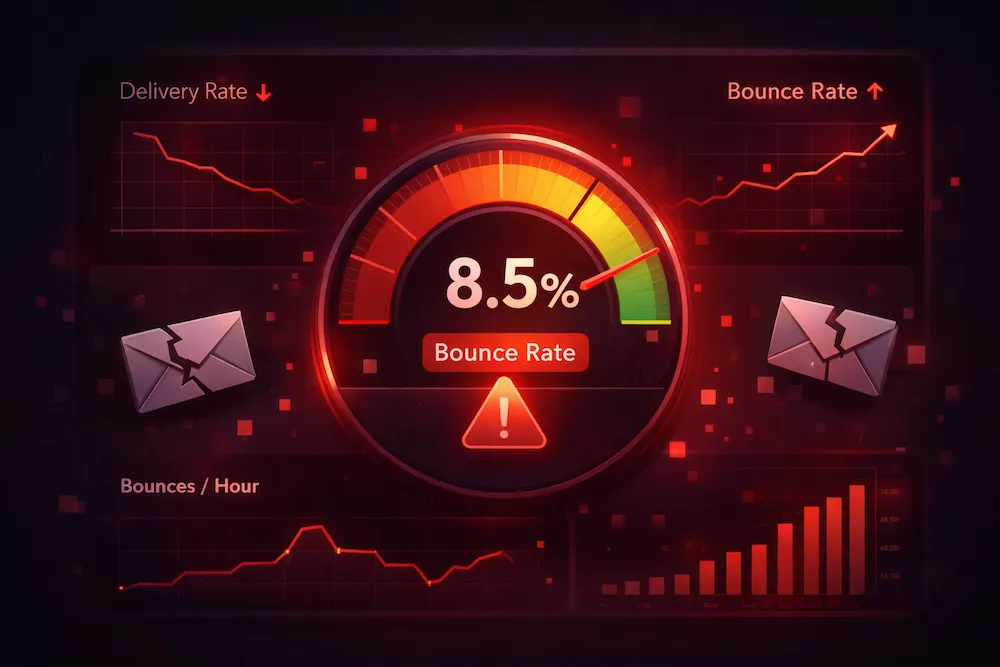
When you send emails to invalid addresses, you trigger a chain reaction that most marketers don't see until it's too late:
- Bounces pile up. Every hard bounce tells inbox providers (Gmail, Outlook, Yahoo) that you're not maintaining your list.
- Your sender reputation drops. ISPs assign a reputation score to every sending domain. High bounce rates are one of the fastest ways to tank it.
- Your emails land in spam. Once your reputation drops, even your legitimate emails to real subscribers start hitting the spam folder instead of the inbox.
- Engagement metrics plummet. Fewer people see your emails, so open rates and click rates crater.
- Revenue disappears. Lower engagement means fewer conversions, fewer sales, and a lower ROI on every email you send.
This isn't hypothetical. It's happening to thousands of businesses right now — and most don't realize why their email performance is declining.
Let's Do the Math
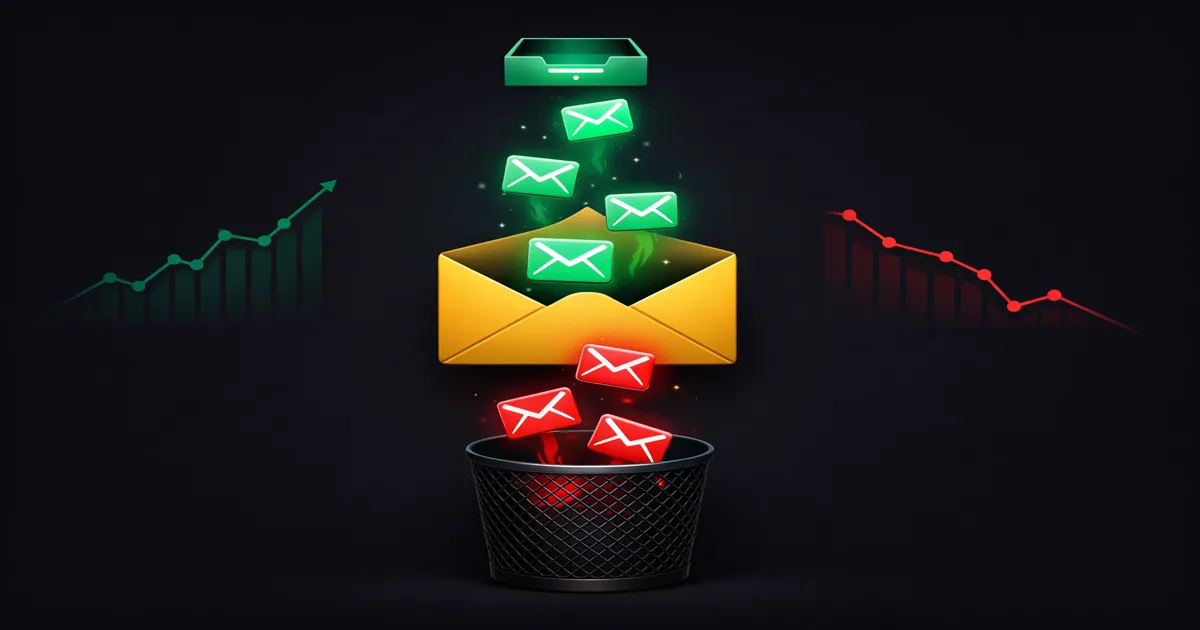
Here's a side-by-side comparison of a 100,000-person list with and without regular list cleaning:
Without Cleaning
- 25% decay → 25,000 invalid
- 80% inbox placement → 60,000
- 20% open rate → 12,000 opens
- 3% click rate → 3,600 clicks
With Cleaning
- Verification → 75,000 valid
- 95% inbox placement → 71,250
- 25% open rate → 17,812 opens
- 4% click rate → 7,125 clicks
That's 98% more clicks — nearly double — just from removing invalid addresses before hitting send.
If each click is worth $2 in revenue (a conservative estimate for most e-commerce businesses), that's an extra $7,050 per campaign. Over 12 monthly campaigns, that's $84,600 in recovered revenue per year.
Why Does List Decay Happen?
Email list decay isn't a bug — it's a natural part of how the internet works. Here are the most common reasons addresses go bad:
- Job changes: The average person changes jobs every 2-3 years. When they leave, their corporate email gets deactivated. B2B lists are especially vulnerable.
- Abandoned inboxes: People create throwaway accounts for one-time sign-ups, then never check them again.
- Typos at sign-up: "gmial.com" instead of "gmail.com", "john@yahooo.com" — these look real in your CRM but will never reach anyone.
- ISP recycling: Some providers deactivate dormant accounts and eventually recycle the address — sometimes as a spam trap.
- Domain expirations: Small businesses shut down, domains expire, and every email address on that domain becomes invalid overnight.
The Spam Trap Problem
Among all the ways a dirty list can hurt you, spam traps are the most dangerous. A spam trap is an email address operated by an ISP or anti-spam organization specifically to catch senders who don't clean their lists.
There are two types:
- Pristine traps: Addresses that were never used by a real person. They exist solely to catch scrapers and purchased-list senders. Hitting one is a major red flag.
- Recycled traps: Old, abandoned addresses that ISPs have repurposed. If you're still sending to an address that's been inactive for years, you're likely hitting recycled traps.
Even a single spam trap hit can land your entire sending domain on a blocklist, causing all your emails — to every subscriber — to bounce or land in spam.
What "Clean" Actually Means
Email verification isn't just about removing obviously fake addresses. A thorough verification process checks multiple layers:
- Syntax check: Is the email formatted correctly? (catches typos and garbage entries)
- Domain check: Does the domain exist and have valid MX records? (catches expired domains)
- Mailbox check: Does the specific mailbox exist on the server? (catches deleted accounts)
- Catch-all detection: Some domains accept all emails regardless of whether the mailbox exists — these are risky to send to.
- Disposable email detection: Identifies temporary email services (Guerrilla Mail, Temp Mail, etc.) that people use for one-time sign-ups.
- Role-based detection: Addresses like info@, admin@, support@ are often monitored by multiple people and have higher complaint rates.
When to Clean Your List
The short answer: more often than you think. Here's a practical schedule:
- Before every major campaign: Launching a product, running a sale, or sending a holiday campaign? Verify first. The stakes are too high to risk bounces.
- Monthly or quarterly: Set a recurring schedule based on your list growth rate. If you're adding thousands of new subscribers per month, monthly verification is worth it.
- After periods of inactivity: Haven't emailed a segment in 6+ months? Verify before re-engaging. Lists decay fastest when they're not being used.
- At the point of capture: The best time to verify an email is when someone enters it. Real-time API verification catches typos and fake addresses before they ever enter your database.
The Google and Yahoo Factor
In 2024, Google and Yahoo introduced new sender requirements that made list hygiene even more critical. If you send more than 5,000 emails per day, you must:
- Authenticate with SPF, DKIM, and DMARC
- Keep spam complaint rates below 0.3%
- Include one-click unsubscribe
- Maintain low bounce rates
Failing to meet these requirements means your emails won't reach Gmail or Yahoo inboxes — which together account for over 60% of consumer email addresses. A dirty list makes compliance nearly impossible.
The Bottom Line
Email marketing still delivers the highest ROI of any digital channel — $36 to $42 for every $1 spent, according to industry benchmarks. But that number assumes your emails are actually reaching real people.
A dirty list doesn't just waste your sending costs. It actively damages your sender reputation, pushes future emails to spam, and erodes the trust you've built with subscribers who do want to hear from you.
List cleaning isn't a one-time task — it's an ongoing process that protects your most valuable marketing asset. The cost of verification is a fraction of the revenue you recover by reaching real inboxes.
Ready to clean your list?
ClearBounce verifies email addresses in bulk or in real-time via API. Start with 100 free credits — no credit card required.
Start Verifying for Free