Email List Building: 15 Proven Strategies to Grow Your List in 2026

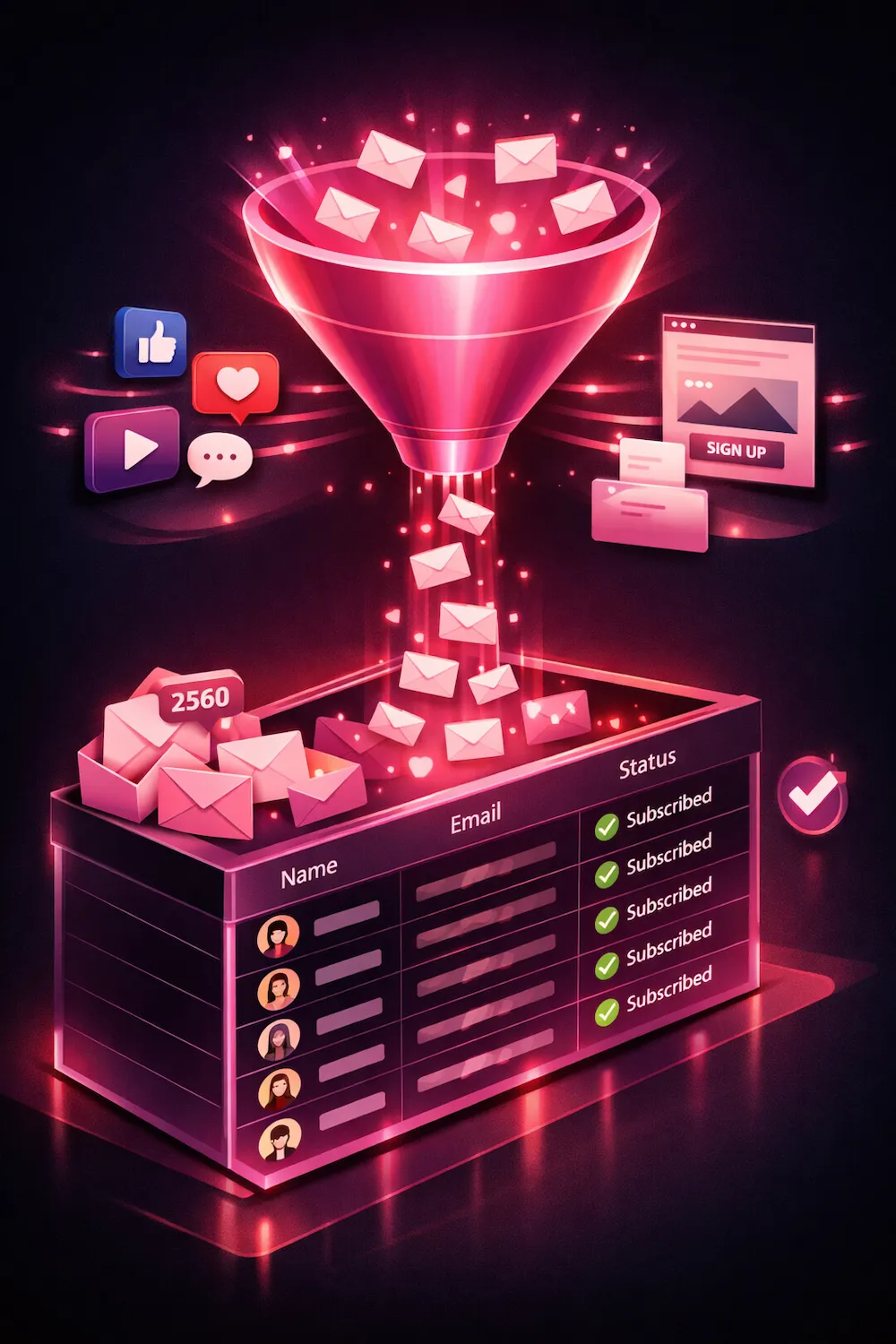
Every dollar you invest in email marketing returns an average of $36. No other channel comes close. But that return is only possible if you have a list of real people who actually want to hear from you. Building that list -- the right way -- is the single most important investment you can make in your marketing.
The problem is that most advice about list building is vague, outdated, or downright risky. "Just add a signup form to your website" is not a strategy. And "buy a list to get started faster" is a recipe for destroying your email deliverability before you even begin.
This guide covers 15 list-building strategies that actually work in 2026, ranked by effort and impact. More importantly, it covers how to keep your list healthy as it grows -- because a big list full of bad addresses is worse than a small list full of engaged subscribers.
Why Email List Building Still Matters in 2026
Social media algorithms change. Ad costs keep climbing. SEO takes months. But your email list? That's an asset you own. No algorithm decides whether your subscribers see your message. No platform can take it away from you.
Consider the numbers:
$36
average return for every $1 spent on email marketing
4.2B
email users worldwide in 2026
22%
of email addresses go bad every year through natural decay
That last number is the reason list building can never stop. Even if you do nothing wrong, your list is shrinking by roughly a fifth every year as people change jobs, abandon email addresses, and move on. You need a constant pipeline of new, high-quality subscribers just to maintain your current reach -- let alone grow it.
Quality vs. Quantity: The List-Building Mindset
Before we get into tactics, let's get one thing straight: a bigger list is not a better list. A list of 5,000 engaged subscribers who open, click, and buy will outperform a list of 50,000 uninterested contacts every single time.
Here's why quality matters more than size:
- Engagement drives deliverability. Mailbox providers like Gmail watch how recipients interact with your emails. High engagement signals that your emails are wanted, which earns you better inbox placement. Low engagement does the opposite.
- Bad addresses destroy reputation. Sending to invalid, inactive, or purchased addresses triggers bounces, spam complaints, and spam trap hits -- all of which damage your sender reputation.
- Revenue comes from engaged subscribers. An email that reaches an engaged subscriber generates revenue. An email that bounces or lands in spam generates cost -- and risk.
Every strategy in this guide is designed to attract permission-based, genuinely interested subscribers. That's the only kind worth having.
15 Proven Strategies to Grow Your Email List
1. Lead Magnets
A lead magnet is a free resource you offer in exchange for an email address. It's the workhorse of list building because it gives people a concrete reason to subscribe. The key is relevance -- your lead magnet should solve a specific problem for your target audience.
Effective lead magnets in 2026 include templates, checklists, swipe files, spreadsheet tools, short video courses, and industry reports. The best ones take less than 10 minutes to consume and deliver immediate value. Avoid generic ebooks that nobody reads. Instead, create something people will actually use.
2. Content Upgrades
A content upgrade is a lead magnet that's specific to a single piece of content. If someone is reading your blog post about email subject lines, offer them a downloadable "50 High-Converting Subject Line Templates" right inside the post. Because the offer is directly related to what they're already reading, conversion rates are significantly higher than generic sidebar forms -- often 5-15% compared to 1-3%.
The formula is simple: find your highest-traffic blog posts, create a bonus resource that extends the value of each one, and add an inline opt-in form within the content.
3. Exit-Intent Popups
Exit-intent popups appear when a visitor moves their cursor toward the browser's close button, signaling they're about to leave. This is your last chance to convert them. Done well, exit-intent popups convert 2-4% of abandoning visitors. Done poorly -- covering the screen the moment someone arrives -- they annoy people and increase bounce rates.
Best practices: delay the popup by at least 5 seconds, offer genuine value (not just "subscribe to our newsletter"), limit display to once per session, and make the close button clearly visible. Test different offers to find what resonates with your audience.
4. Webinars and Live Events
Webinar registration forms are among the highest-converting opt-in mechanisms because the perceived value is high. A live session with an expert, a Q&A, or a product demo gives people a compelling reason to hand over their email. After the webinar, you have a warm lead who has already invested time with your brand.
You don't need expensive software. A Zoom link and a landing page are enough. Record every session and repurpose the recording as a gated on-demand asset for ongoing list growth.
5. Social Media List Building
Social media is excellent for reaching new audiences, but those followers don't belong to you. The goal is to convert social followers into email subscribers. Share snippets of your lead magnets on social platforms with a link to the full resource (email required). Run Stories or Reels with "DM me [keyword]" calls to action that trigger automated signup flows. Pin a tweet or post linking to your best opt-in offer.
LinkedIn is particularly effective for B2B list building. Share valuable insights in posts, then direct readers to a newsletter signup or gated resource for the deeper analysis.
6. Referral Programs
Your existing subscribers are your best acquisition channel. A referral program incentivizes them to share your newsletter or content with their network. Offer rewards at different referral tiers -- a free template at 3 referrals, an exclusive guide at 10, a one-on-one consultation at 25. Tools like SparkLoop and ReferralHero make this straightforward to implement.
Referral-acquired subscribers tend to be higher quality because they come with a personal recommendation and a built-in expectation of value.
7. Gated Content
Gating means placing premium content behind an email signup wall. Industry reports, detailed case studies, benchmark data, and original research all work well as gated content because they offer unique value that can't be found elsewhere. The content must be genuinely worth the exchange -- if someone gives you their email and gets a thin, recycled article, they'll unsubscribe and never trust you again.
A hybrid approach works well: make the first section of a report freely available (which also helps with SEO), then gate the rest for email subscribers.
8. Free Tools and Calculators
Interactive tools generate email signups at extremely high rates because the value exchange is immediate and concrete. An ROI calculator, a headline analyzer, a website grader, or an email subject line scorer gives users instant, personalized results -- in exchange for their email address.
Building a free tool requires more upfront investment than a PDF lead magnet, but the payoff is compounding. A useful tool generates organic search traffic, social shares, and backlinks indefinitely. Many SaaS companies attribute their early growth to a single free tool that brought in thousands of subscribers per month.
9. Quizzes and Assessments
Quizzes are irresistible. People want to know "What type of marketer are you?" or "How healthy is your email list?" An engaging quiz draws people through multiple questions, building investment and curiosity. Then, to see their results, they enter their email. Typical conversion rates for quizzes are 30-50% -- far higher than almost any other opt-in mechanism.
The bonus: quiz responses give you segmentation data. If someone's quiz results show they're struggling with deliverability, you can send them content about improving email deliverability rather than generic content. Personalization starts at the point of signup.
10. Co-Marketing and Cross-Promotions
Partner with complementary (non-competing) brands to cross-promote to each other's audiences. Options include co-hosted webinars, joint lead magnets, newsletter swaps, and shared giveaways. If you sell email marketing software, partner with a landing page builder. Your audiences overlap but you're not competitors.
Newsletter swaps are especially efficient: you recommend a partner's newsletter to your audience, and they do the same for you. Both sides grow, and subscribers come pre-qualified with interest in your space.
11. Dedicated Landing Pages
Your homepage is not a landing page. A dedicated landing page has one goal: convert the visitor into a subscriber. No navigation menu, no distracting links, no competing CTAs. Just a clear headline, a compelling description of what they'll get, social proof, and a signup form.
Create separate landing pages for each lead magnet and traffic source. A visitor from a Facebook ad about email deliverability should land on a page tailored to that topic -- not your generic homepage. Conversion rates on focused landing pages typically run 20-40%, compared to 1-3% on homepages.
12. Contests and Giveaways
A well-executed contest can generate thousands of subscribers in days. Offer a prize relevant to your audience (not a generic iPad -- you'll attract freebie seekers instead of potential customers). Use viral mechanics: give extra entries for sharing, referring friends, or following on social media.
The critical step is what happens after the contest. Send a welcome email immediately, set expectations, and deliver value fast. Without this, your contest subscribers will churn within weeks. Also, clean the resulting list promptly -- contests attract a higher-than-normal percentage of disposable and temporary email addresses.
13. Blog CTAs (In-Content and End-of-Post)
If you're already publishing blog content, you're sitting on untapped list-building potential. Add contextual calls to action within your articles -- not just at the end, but inline where they're most relevant. A post about email double opt-in should have an inline CTA for a related resource right after the section where you explain the benefits.
End-of-post CTAs should offer something specific to the topic, not a generic "subscribe to our newsletter." Readers who've consumed an entire article are highly engaged -- meet them with a relevant offer.
14. Checkout and Post-Purchase Opt-In
If you run an e-commerce store or SaaS product, the checkout flow is prime real estate for list building. Add an opt-in checkbox (unchecked by default, per GDPR and best practices) asking customers if they'd like to receive product updates, tips, or exclusive offers by email.
Post-purchase email signups convert well because the customer has already demonstrated trust by buying from you. The key is to make the email value proposition distinct from transactional emails -- "Get weekly tips on getting more from [product]" is more compelling than "Sign up for marketing emails."
15. Real-Time Email Verification via API
This isn't a traditional list-building strategy -- it's what makes every other strategy work better. Integrating an email verification API into your signup forms validates every email address the moment it's entered. Invalid addresses, disposable emails, and typo-ridden entries are caught before they ever reach your list.
Without real-time verification, 5-15% of your new signups are wasted -- fake addresses, typos, and throwaway emails that will never open a single message. Worse, they inflate your list size while dragging down your engagement rates and threatening your deliverability. By verifying at the point of entry, every subscriber you add is a real person with a working inbox.
Quick-Reference Table: All 15 Strategies at a Glance
Here's every strategy ranked by effort to implement and expected impact on list growth:
| # | Strategy | Effort | Impact | Best For |
|---|---|---|---|---|
| 1 | Lead Magnets | Medium | High | All businesses |
| 2 | Content Upgrades | Medium | High | Content-heavy sites |
| 3 | Exit-Intent Popups | Low | Medium | High-traffic websites |
| 4 | Webinars & Live Events | High | High | B2B, educators, SaaS |
| 5 | Social Media | Medium | Medium | Brands with social following |
| 6 | Referral Programs | Medium | High | Newsletters, communities |
| 7 | Gated Content | Medium | Medium | B2B, research-driven brands |
| 8 | Free Tools & Calculators | High | Very High | SaaS, agencies |
| 9 | Quizzes & Assessments | Medium | High | D2C, education, coaching |
| 10 | Co-Marketing | Medium | Medium | Any business with partners |
| 11 | Dedicated Landing Pages | Low | High | Paid traffic campaigns |
| 12 | Contests & Giveaways | Medium | High (short-term) | D2C, e-commerce |
| 13 | Blog CTAs | Low | Medium | Blogs with organic traffic |
| 14 | Checkout Opt-In | Low | Medium | E-commerce, SaaS |
| 15 | Real-Time Email Verification | Low | High | Every signup form |
What NOT to Do: List-Building Practices That Will Backfire
Not all list growth is good growth. These practices will get your emails sent to spam, your domain blacklisted, and your ESP account suspended.
Never Buy Email Lists
Purchased lists are the fastest path to deliverability disaster. Here's what happens when you send to a bought list:
- Massive bounce rates. Purchased lists are full of outdated, invalid, and non-existent addresses. Bounce rates of 20-40% are common, and anything above 2% damages your sender reputation.
- Spam trap hits. List sellers don't verify their data. Many addresses on purchased lists are recycled spam traps -- addresses that mailbox providers monitor specifically to catch senders with bad list practices.
- Spam complaints. People who never asked for your email will mark it as spam. A complaint rate above 0.1% triggers reputation penalties. Purchased lists routinely generate complaint rates 10x that threshold.
- Blacklisting. A single send to a purchased list can land you on Spamhaus, Barracuda, or other major blocklists. Getting delisted takes weeks and isn't guaranteed.
- Legal risk. GDPR, CAN-SPAM, and CASL all require consent before sending marketing emails. Purchased lists come with zero consent. Fines under GDPR can reach 4% of annual revenue.
There is no shortcut here. The only email addresses worth sending to are those collected directly from the owner with clear, informed consent.
Never Scrape Email Addresses
Scraping emails from websites, social profiles, forums, or directories is the same problem as buying lists with extra legal risk. The addresses were not given to you. The owners did not consent. The results are identical: bounces, complaints, blacklists, and potential lawsuits. It also violates the terms of service of virtually every platform you'd scrape from.
Never Use Pre-Checked Opt-In Boxes
A pre-checked "subscribe me" checkbox during registration or checkout technically adds people to your list, but those subscribers never made an active choice. They'll have low engagement, high unsubscribe rates, and they'll occasionally report you as spam. Use unchecked boxes and earn genuine opt-ins. The list will be smaller but dramatically healthier.
Maintaining List Quality as You Grow
Growing your list is only half the equation. Keeping it clean is the other half. A dirty email list costs you money, damages your reputation, and undermines every campaign you send. Here's how to maintain quality at scale:
Implement Double Opt-In
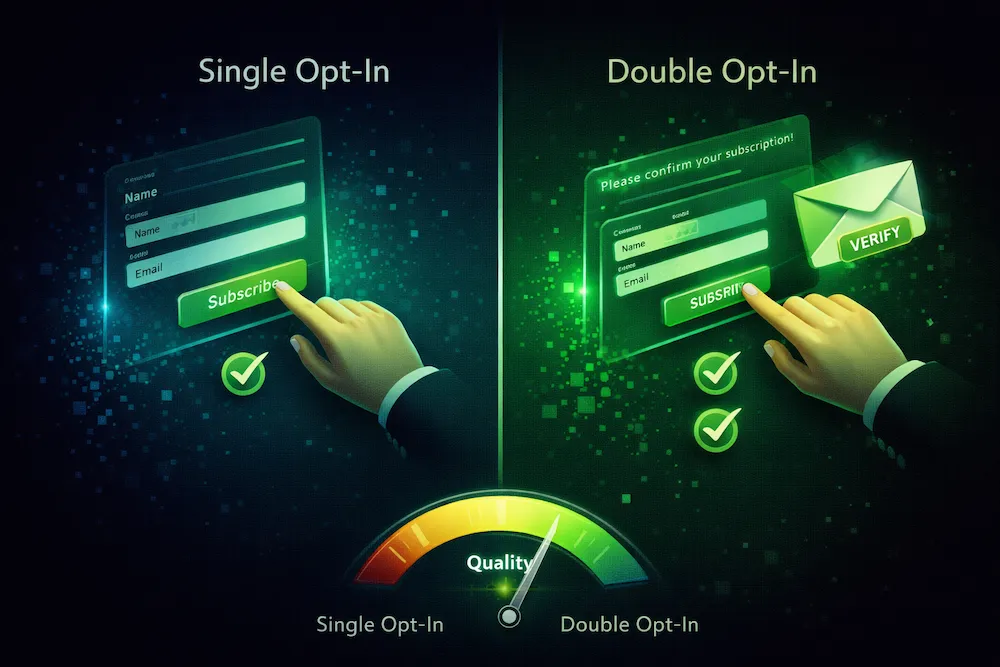
Double opt-in requires new subscribers to confirm their email address by clicking a link in a confirmation email. This adds a small amount of friction to the signup process, but the benefits are substantial: it eliminates fake signups, catches typos, confirms the address is real and accessible, and ensures the subscriber genuinely wants your emails. Lists built with double opt-in consistently show higher open rates, lower complaints, and better deliverability.
Verify New Subscribers in Real Time
Integrating email verification at the point of signup catches invalid and risky addresses before they enter your database. A verification API checks the email in milliseconds and rejects addresses that would bounce, belong to disposable email providers, or show other risk signals. This is the most effective way to ensure that every address added to your list is legitimate.
Clean Your List Regularly
Even with verification at signup, addresses decay over time. People abandon inboxes, change jobs, and let domains expire. Run your full list through bulk email verification every 30-90 days to catch addresses that have gone bad since they were added. Remove anyone who hasn't engaged in 6+ months after a re-engagement campaign.
Segment by Engagement
Divide your list into engagement tiers: active (opened or clicked in the last 30 days), warm (engaged in the last 90 days), and cold (no engagement in 90+ days). Send your most important campaigns to your active segment first. If they perform well, expand to the warm segment. Use your cold segment for re-engagement campaigns only -- never for regular sends.
Monitor Key Metrics
Track these numbers after every campaign:
Hard bounces indicate invalid addresses. If your bounce rate exceeds 2% on any campaign, stop sending and clean your list immediately.
Every complaint is a direct signal to mailbox providers that your emails are unwanted. Gmail's threshold is 0.3% -- exceed that and deliverability drops fast.
Some unsubscribes are normal and healthy. A sudden spike after a campaign means your content missed the mark or you're emailing too frequently.
Net growth (new subscribers minus unsubscribes and bounces). Healthy growth outpaces the ~22% annual decay rate. Track this monthly.
The best email list in the world is not the biggest one. It's the one where every subscriber is a real person who chose to be there, with a valid email address, who actually reads what you send. Build for quality first and the revenue will follow.
The Bottom Line
Email list building is not a one-time project. It's an ongoing discipline. The 15 strategies in this guide give you a complete toolkit -- from quick wins like exit-intent popups and blog CTAs to high-impact investments like free tools and webinars. Start with two or three strategies that fit your business and execute them well before adding more.
But strategy alone isn't enough. The most common reason email marketing underperforms isn't a lack of subscribers -- it's a list full of addresses that don't work. Typos, fake signups, disposable addresses, and natural decay silently erode your list's value every day. If you're investing time and money to grow your list, protect that investment by verifying every address that enters it.
The senders who see the highest ROI from email are the ones who treat list quality with the same seriousness as list growth. Grow your list with permission-based, value-driven strategies. Verify every address at the point of entry. Clean your list regularly. Remove the dead weight. What you're left with is a list that actually drives revenue -- and that's the whole point.
Verify new subscribers in real-time.
ClearBounce catches invalid, disposable, and risky email addresses the moment they're entered -- before they ever reach your list. Keep every new subscriber real, reachable, and ready to engage.
100 free credits. No credit card required.
Start Verifying for Free