GDPR e Email Marketing: Guia Completo de Conformidade (2026)
Você construiu uma lista de assinantes, criou uma campanha de email atraente e está pronto para enviar. Mas se algum dos seus destinatários estiver na União Europeia, existe uma regulamentação que rege todos os aspectos de como você coleta, armazena e usa seus dados -- incluindo o endereço de email. Chama-se Regulamento Geral de Proteção de Dados, e errar pode custar milhões.
O GDPR não é apenas uma formalidade legal. É uma mudança fundamental na forma como as empresas devem abordar o email marketing. A regulamentação dá aos indivíduos poder real sobre seus dados pessoais e responsabiliza as organizações quando os tratam de forma inadequada. Seja você um profissional de marketing solo gerenciando uma newsletter ou uma empresa com milhões de assinantes, as regras se aplicam igualmente.
Este guia detalha tudo o que você precisa saber sobre o GDPR no que se refere ao email marketing em 2026 -- desde as bases legais para envio de emails, até o que conta como consentimento válido, até os passos práticos que você deve seguir para manter a conformidade.
O Que É GDPR?
O Regulamento Geral de Proteção de Dados (GDPR) é uma lei de privacidade de dados que entrou em vigor em toda a União Europeia em 25 de maio de 2018. Substituiu a Diretiva de Proteção de Dados de 1995 e estabeleceu uma estrutura única e unificada para proteção de dados em todos os estados membros da UE e do EEE.
Em sua essência, o GDPR rege como as organizações coletam, processam, armazenam e compartilham dados pessoais -- qualquer informação que possa identificar um indivíduo vivo. Um endereço de email é dado pessoal. Um nome associado a um endereço de email é dado pessoal. Um endereço IP registrado quando alguém se inscreve na sua lista é dado pessoal.
A regulamentação se aplica a qualquer organização que processe dados pessoais de indivíduos localizados na UE, independentemente de onde a organização esteja sediada. Se você é uma empresa dos EUA enviando emails de marketing para assinantes na Alemanha, o GDPR se aplica a você. Se você é uma empresa australiana com clientes na França, o GDPR se aplica a você.
Como o GDPR Se Aplica ao Email Marketing
Toda atividade de email marketing envolve o processamento de dados pessoais. Quando um visitante insere seu endereço de email no seu formulário de cadastro, você está coletando dados pessoais. Quando você armazena esse endereço na sua plataforma de email, você está processando dados pessoais. Quando você envia uma campanha, você está usando dados pessoais. Quando você rastreia aberturas e cliques, você está processando dados pessoais.
O GDPR exige que toda instância de processamento de dados tenha uma base legal -- uma justificativa legal para o motivo pelo qual você tem permissão para processar esses dados. Para email marketing, existem duas bases legais que importam:
Consentimento (Artigo 6(1)(a))
Mais ComumO indivíduo deu consentimento claro e afirmativo para receber emails de marketing. Esta é a base legal mais segura e amplamente utilizada para email marketing. O consentimento deve ser dado livremente, específico, informado e inequívoco.
Interesse Legítimo (Artigo 6(1)(f))
Escopo Mais RestritoVocê tem uma razão comercial genuína para enviar o email, e isso não se sobrepõe aos direitos do indivíduo. Normalmente limitado a clientes existentes que recebem informações sobre produtos ou serviços semelhantes que compraram anteriormente. Requer uma Avaliação de Interesse Legítimo (LIA) documentada.
Para a maioria dos profissionais de email marketing, o consentimento é a base legal correta. O interesse legítimo é mais difícil de justificar, carrega mais risco e está sujeito a uma interpretação mais rigorosa pelas autoridades de proteção de dados. Na dúvida, obtenha consentimento.
O Que Conta Como Consentimento Válido Sob o GDPR
Nem todo consentimento é igual. O GDPR estabelece um padrão elevado para o que constitui consentimento válido. Se o seu mecanismo de consentimento não atender a esses requisitos, você não tem uma base legal para enviar emails -- mesmo que o assinante tecnicamente "tenha se cadastrado."
O consentimento válido deve ser:
- Dado livremente -- O assinante deve ter uma escolha genuína. Você não pode vincular o consentimento de email marketing ao acesso a um serviço (por exemplo, "concorde com nossos emails de marketing para baixar este whitepaper" não é dado livremente se não houver como baixar sem consentir).
- Específico -- O consentimento deve ser para um propósito específico e claramente definido. Um genérico "podemos entrar em contato com você" não é específico o suficiente. Declare exatamente para o que estão se inscrevendo: "Receba nossa newsletter semanal com dicas de email marketing."
- Informado -- O assinante deve saber quem está coletando seus dados e por quê. Seu formulário de cadastro deve identificar sua organização e explicar claramente quais emails receberão.
- Inequívoco -- O consentimento deve envolver uma ação afirmativa clara. O assinante deve ativamente optar por participar marcando uma caixa de seleção desmarcada, clicando em um botão de inscrição ou realizando outra ação deliberada. Caixas pré-marcadas, silêncio e inatividade não contam.
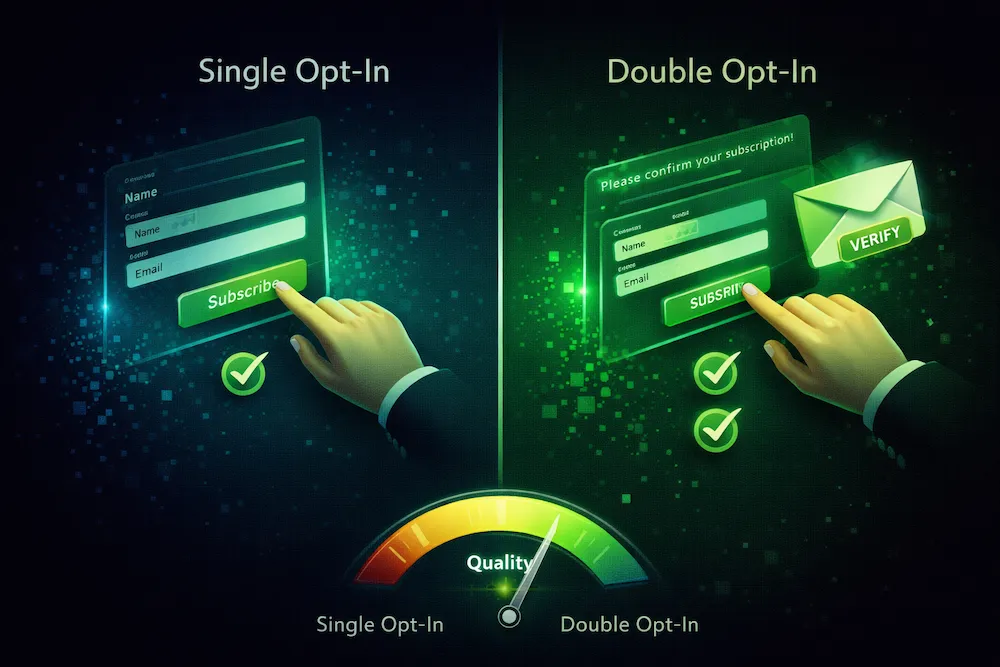
É por isso que o double opt-in se tornou o padrão ouro para email marketing em conformidade com o GDPR. Com o double opt-in, o assinante insere seu email, recebe um email de confirmação e clica em um link para verificar sua intenção. Isso cria um registro inegável de consentimento afirmativo.
Checklist de Requisitos do GDPR para Profissionais de Email Marketing
Aqui está um checklist abrangente cobrindo todos os principais requisitos do GDPR que se aplicam às operações de email marketing:
| Requisito | O Que Você Deve Fazer | Prioridade |
|---|---|---|
| Base legal | Identifique e documente sua base legal (consentimento ou interesse legítimo) para cada lista de email | Crítico |
| Mecanismo de consentimento | Use caixas de seleção desmarcadas ou botões claros de inscrição; nunca pré-marque ou assuma consentimento | Crítico |
| Registros de consentimento | Armazene provas com data e hora de quando, como e com o que cada assinante consentiu | Crítico |
| Política de privacidade | Vincule uma política de privacidade clara em cada formulário de cadastro explicando uso de dados, retenção e direitos | Crítico |
| Cancelamento fácil | Inclua um link de cancelamento visível e funcional em cada email de marketing; atenda solicitações em até 30 dias (melhor prática: imediatamente) | Alto |
| Minimização de dados | Colete apenas os dados que você realmente precisa; não exija nome, telefone e empresa apenas para enviar uma newsletter | Alto |
| Direito ao apagamento | Tenha um processo para excluir completamente os dados de um assinante quando solicitado | Alto |
| Acordos de processamento de dados | Assine DPAs com todos os terceiros que lidam com seus dados de assinantes (plataforma de email, analytics, CRM) | Alto |
| Notificação de violação de dados | Reporte violações que afetem dados de assinantes à sua autoridade supervisora em até 72 horas | Médio |
| Avaliação de Impacto na Proteção de Dados | Realize uma DPIA para operações de email marketing em larga escala ou ao processar dados sensíveis | Médio |
Registros de Consentimento: O Que Armazenar e Por Quê
O GDPR coloca o ônus da prova sobre você. Se um regulador ou um assinante questionar seu direito de enviar emails, você deve ser capaz de produzir evidências de que o consentimento válido foi dado. Isso significa armazenar registros detalhados de consentimento para cada assinante.
Seus registros de consentimento devem incluir:
- Quem consentiu -- o endereço de email (e nome, se coletado)
- Quando consentiu -- um timestamp preciso
- Como consentiu -- o formulário específico, URL da página ou mecanismo utilizado
- Com o que consentiu -- o texto exato que viram no momento do cadastro
- Confirmação de double opt-in -- se utilizado, o timestamp de quando clicaram no link de confirmação
- Endereço IP no cadastro -- fornece evidência adicional da ação realizada
Mantenha esses registros durante toda a duração do relacionamento com o assinante, mais um período de buffer razoável (dois a três anos é a prática padrão) após o cancelamento, caso uma investigação regulatória surja posteriormente.
O Direito ao Apagamento e Direitos dos Titulares de Dados
O GDPR dá aos indivíduos um conjunto de direitos sobre seus dados pessoais que você deve respeitar. Para profissionais de email marketing, os direitos mais relevantes são:
Quando um assinante solicita exclusão, você deve apagar todos os seus dados pessoais dos seus sistemas -- não apenas cancelar a inscrição. Isso inclui removê-los da sua plataforma de email, CRM, ferramentas de analytics e quaisquer backups onde seja viável.
Os assinantes podem solicitar uma cópia de todos os dados pessoais que você possui sobre eles. Você deve responder em até 30 dias com uma exportação abrangente e legível cobrindo endereços de email, registros de consentimento, dados de engajamento e qualquer informação de perfil.
Os assinantes têm o direito de corrigir dados imprecisos que você possui sobre eles. Se alguém solicitar que seu nome, endereço de email ou outros detalhes sejam atualizados, você deve fazer a correção prontamente.
Retirar o consentimento deve ser tão fácil quanto dá-lo. Se alguém se inscreveu com um clique, deve poder cancelar a inscrição com um clique. Você não pode exigir que o assinante faça login, preencha um formulário ou ligue para um número de telefone para optar por sair.
Acordos de Processamento de Dados (DPAs)
Se qualquer terceiro manipula seus dados de assinantes em seu nome, o GDPR exige um Acordo de Processamento de Dados entre você (o controlador de dados) e eles (o processador de dados). Isso se aplica ao seu provedor de serviço de email, sua plataforma de CRM, suas ferramentas de analytics, seu serviço de verificação de email e qualquer outro fornecedor que toque nos dados de assinantes.
Um DPA deve especificar:
- Quais dados estão sendo processados e para qual finalidade
- A duração do processamento
- As obrigações do processador em relação à segurança dos dados
- Acordos com subprocessadores (se o processador usa outros fornecedores)
- O que acontece com os dados quando o contrato termina
- O dever do processador de auxiliar com solicitações dos titulares de dados
A maioria das plataformas de email e ferramentas SaaS respeitáveis fornecem DPAs pré-assinados. Se um fornecedor não pode ou não quer fornecer um, isso é um sinal de alerta sério. Não processe dados de assinantes da UE através de qualquer serviço que se recuse a assinar um DPA.
GDPR vs. CAN-SPAM vs. CASL: Principais Diferenças
O GDPR não é a única regulamentação de email marketing no mundo. Se você envia emails internacionalmente, provavelmente precisa cumprir múltiplas estruturas regulatórias. Veja como as três principais regulamentações se comparam:
| GDPR (EU/EEA) | CAN-SPAM (US) | CASL (Canada) | |
|---|---|---|---|
| Modelo de consentimento | Opt-in obrigatório antes do envio | Opt-out (pode enviar até cancelarem) | Opt-in obrigatório (consentimento expresso ou implícito) |
| Caixas pré-marcadas | Não permitido | Permitido | Não permitido |
| Prazo para cancelamento | Sem atraso indevido (melhor prática: imediato) | 10 dias úteis | 10 dias úteis |
| Direito ao apagamento | Sim -- exclusão completa dos dados | Não | Não (apenas cancelamento) |
| Registros de consentimento obrigatórios | Sim -- registros detalhados obrigatórios | Não explicitamente obrigatório | Sim |
| Endereço físico nos emails | Não obrigatório (mas recomendado) | Obrigatório | Obrigatório |
| Multas máximas | Até 20M EUR ou 4% do faturamento global | $51.744 por email | $10M CAD por violação |
| Aplica-se a remetentes fora da jurisdição | Sim | Sim (direcionando destinatários dos EUA) | Sim |
A conclusão principal: se você cumpre o GDPR, você está em grande parte em conformidade com o CAN-SPAM e o CASL também, já que o GDPR é o mais rigoroso dos três. O inverso não é verdade -- a conformidade apenas com o CAN-SPAM está longe de ser suficiente para o GDPR.
Penalidades e Multas
As violações do GDPR não são riscos teóricos. As autoridades de proteção de dados em toda a Europa emitiram multas substanciais por violações de email marketing. A regulamentação define dois níveis de penalidades:
20M EUR
multa máxima ou 4% do faturamento global anual, o que for maior
72 hrs
prazo para reportar uma violação de dados à autoridade supervisora
2.000+
multas GDPR emitidas por autoridades de proteção de dados da UE desde 2018
Nível 1 (Artigo 83(4)) -- multas de até 10 milhões de EUR ou 2% do faturamento global por violações relacionadas a manutenção de registros, acordos de processamento de dados, segurança de dados e notificações de violação.
Nível 2 (Artigo 83(5)) -- multas de até 20 milhões de EUR ou 4% do faturamento global por violações relacionadas à base legal para processamento, requisitos de consentimento e direitos dos titulares de dados. Este é o nível em que a maioria das violações de email marketing se enquadra.
Além das multas, os reguladores também podem emitir ordens de execução que exigem que você pare de processar dados inteiramente -- efetivamente encerrando sua operação de email marketing até que você demonstre conformidade.
Passos Práticos de Conformidade para 2026
A teoria é importante, mas o que importa é a implementação. Aqui estão os passos concretos que você deve seguir para garantir que seu email marketing esteja em conformidade com o GDPR:
1. Audite seus formulários de cadastro
Revise cada formulário que coleta endereços de email. Garanta que cada um tenha uma caixa de consentimento desmarcada (ou mecanismo equivalente claro de opt-in), um link para sua política de privacidade, linguagem clara explicando o que o assinante receberá e nenhum consentimento agrupado com outros serviços ou termos.
2. Implemente o double opt-in
O double opt-in não é estritamente exigido pelo GDPR, mas é a evidência mais forte de consentimento que você pode produzir. Ele confirma que o endereço de email é válido, que o proprietário do endereço é a pessoa que se cadastrou e que realmente deseja receber seus emails. A maioria das autoridades de proteção de dados o considera uma melhor prática.
3. Limpe sua lista existente
Se você tem assinantes que se cadastraram antes do GDPR ou através de mecanismos não conformes, você precisa reconsentir ou removê-los. Passe sua lista por um serviço de verificação de email para remover endereços inválidos e de risco, depois envie uma campanha de repermissão para os assinantes restantes pedindo que confirmem seu consentimento. Quem não confirmar deve ser removido.
4. Configure o armazenamento de registros de consentimento
Configure sua plataforma de email ou CRM para registrar automaticamente dados de consentimento: timestamp, URL de origem, endereço IP e o texto exato de consentimento exibido. A maioria das plataformas de email modernas suporta isso nativamente. Se a sua não suporta, construa ou integre um sistema de gerenciamento de consentimento.
5. Revise sua cadeia de processamento de dados
Mapeie cada serviço que toca nos dados dos seus assinantes. Seu provedor de serviço de email, API de verificação de email, CRM, plataforma de analytics, construtor de landing pages -- todos precisam ter DPAs implementados. Verifique se cada fornecedor armazena dados em jurisdições conformes com o GDPR ou possui salvaguardas apropriadas (como Cláusulas Contratuais Padrão) para transferências internacionais.
6. Crie um processo de solicitação de titulares de dados
Crie um processo documentado para lidar com solicitações de acesso, solicitações de apagamento e retiradas de consentimento. Designe um membro da equipe ou departamento responsável por responder. Defina prazos internos que estejam bem dentro da janela regulatória de 30 dias. Teste o processo para garantir que realmente funciona de ponta a ponta.
7. Mantenha sua lista limpa continuamente
A conformidade com o GDPR não é um projeto único. À medida que sua lista cresce, sua exposição também aumenta. A limpeza regular da lista remove endereços inválidos que podem causar bounces, identifica assinantes desengajados que podem não querer mais seus emails e reduz o volume de dados pessoais que você está armazenando -- o que se alinha com o princípio de minimização de dados do GDPR.
8. Treine sua equipe
Todos que tocam no email marketing -- redatores, designers, desenvolvedores, profissionais de marketing, suporte ao cliente -- devem entender o básico da conformidade com o GDPR. Um membro da equipe não treinado adicionando uma caixa pré-marcada ou importando uma lista não verificada pode criar uma violação de conformidade que afeta toda a organização.
A conformidade com o GDPR não é sobre restringir seu marketing. É sobre construir uma base de assinantes que genuinamente quer ouvir de você. As marcas que abraçaram o GDPR cedo viram maior engajamento, menos reclamações e entregabilidade mais forte -- porque cada assinante na lista escolheu estar lá.
Erros Comuns de GDPR no Email Marketing
Mesmo profissionais de marketing bem-intencionados cometem esses erros. Evite-os:
- Confiar apenas na conformidade com o CAN-SPAM -- O CAN-SPAM permite marketing opt-out. O GDPR exige opt-in. Se você tem assinantes na UE, a conformidade com o CAN-SPAM não é suficiente.
- Usar listas de email compradas -- Listas compradas quase nunca vêm com consentimento em conformidade com o GDPR. As pessoas nessas listas não consentiram em receber emails da sua organização especificamente.
- Tratar cancelamento como apagamento -- Cancelar a inscrição de alguém da sua lista não é o mesmo que apagar seus dados. Se solicitarem apagamento, você deve excluir seus dados de todos os sistemas, não apenas parar de enviar emails.
- Esquecer dos dados transacionais -- Seu CRM, analytics e sistemas de suporte podem conter dados de assinantes também. O GDPR se aplica a todos eles, não apenas à sua plataforma de email.
- Não documentar avaliações de interesse legítimo -- Se você depende do interesse legítimo em vez do consentimento, deve ter uma Avaliação de Interesse Legítimo documentada em arquivo. "Achamos que estava tudo bem" não é uma defesa aceitável.
- Ignorar transferências internacionais de dados -- Se sua plataforma de email armazena dados nos EUA ou em outro país fora da UE, você precisa de mecanismos de transferência apropriados implementados.
Como a Verificação de Email Apoia a Conformidade com o GDPR
A verificação de email desempenha um papel direto na conformidade com o GDPR de várias maneiras:
- Precisão dos dados -- O GDPR exige que os dados pessoais sejam precisos e mantidos atualizados. Verificar endereços de email garante que você não esteja armazenando endereços inválidos ou com erros de digitação que não servem a nenhum propósito legítimo.
- Minimização de dados -- Ao remover endereços não entregáveis e de risco, a verificação reduz o volume de dados pessoais que você está processando, alinhando-se com o princípio de minimização de dados do GDPR.
- Redução do risco de reclamações -- Enviar para assinantes verificados e engajados reduz a chance de reclamações de spam, que podem atrair atenção regulatória.
- Melhoria na entregabilidade -- Uma lista limpa significa que seus emails legítimos e consentidos realmente chegam à caixa de entrada. A baixa entregabilidade causada por uma lista suja prejudica todo o propósito de coletar consentimento em primeiro lugar.
Conclusão
O GDPR não vai desaparecer, e a fiscalização só está aumentando. A cada ano, as autoridades de proteção de dados emitem mais multas, mais orientações e mais ações de execução direcionadas às práticas de email marketing. As organizações que tratam o GDPR como algo secundário são as que acabam nas manchetes.
A boa notícia é que email marketing em conformidade com o GDPR é um email marketing melhor. Quando cada assinante na sua lista escolheu ativamente estar lá, suas taxas de abertura são mais altas, suas reclamações são menores, sua entregabilidade é mais forte e seu ROI é melhor. Conformidade e desempenho não estão em conflito -- estão alinhados.
Comece com os fundamentos: obtenha consentimento adequado, mantenha registros, respeite os direitos dos titulares de dados e mantenha uma lista limpa. Faça essas coisas consistentemente e você não apenas evitará multas -- construirá um programa de email que seus assinantes realmente valorizam.
Mantenha a conformidade com uma lista limpa.
O ClearBounce remove endereços de email inválidos, arriscados e não entregáveis da sua lista de assinantes -- ajudando você a manter a precisão dos dados, minimizar o processamento desnecessário de dados e se manter alinhado com os requisitos do GDPR.
100 créditos grátis. Sem cartão de crédito.
Verifique Sua Lista Grátis